
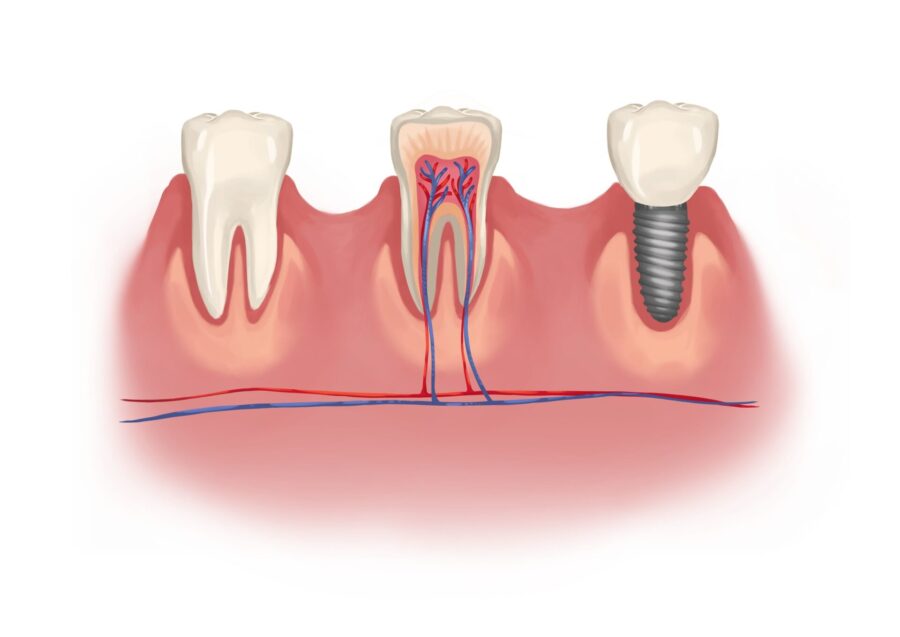
When a tooth is lost, the most obvious change is the empty space left behind. But what happens beneath the surface of the gums is often more significant. The jawbone in that area begins to change almost immediately once a tooth is no longer present.
Teeth do more than help you chew and speak clearly. The roots of your teeth also stimulate the surrounding jawbone every time you bite down. Without that stimulation, the bone gradually begins to shrink. This process happens slowly, but over time it can affect the shape of the jaw and even the stability of neighboring teeth.
Dental implants are designed to address this issue in a way that other tooth replacement options cannot. At Bethea Family Dentistry in Columbia, SC, Dr. Gary Bethea often discusses how implants help protect both the jawbone and the surrounding teeth when a tooth has been lost.
Understanding how implants work can help patients see why they are often recommended as a long-term solution.
What Happens to the Jawbone After Tooth Loss
Natural tooth roots play an important role in maintaining healthy bone structure. Each time you chew, pressure travels through the root of the tooth and into the surrounding bone. That stimulation signals the body to maintain the bone in that area.
When a tooth is removed or lost, the root is no longer present to deliver that stimulation. As a result, the body gradually begins to reabsorb the bone in that area. This process is called bone resorption.
Over time, the jawbone can become thinner and shorter in the area where the tooth once stood. These changes may affect how the bite functions and can alter the appearance of the face as well.
How Dental Implants Support the Jawbone
A dental implant replaces the missing tooth root as well as the visible portion of the tooth. The implant itself is a small titanium post that is placed into the jawbone. During the healing process, the bone gradually bonds to the implant in a process known as osseointegration. Once this connection forms, the implant functions much like a natural tooth root.
Because the implant transfers chewing pressure into the jawbone, it helps maintain the bone in that area. This stimulation helps slow or prevent the bone loss that typically follows tooth loss. For many patients, preserving the jawbone is one of the most important long-term benefits of dental implants.
Protecting the Health of Neighboring Teeth
Dental implants also help preserve the health of the surrounding teeth. When a tooth is missing, the adjacent teeth may gradually shift toward the empty space. This movement can change the alignment of the bite and create areas where food and plaque accumulate more easily.
Traditional dental bridges sometimes require the neighboring teeth to be reshaped so crowns can support the bridge. While bridges are still an effective treatment in many situations, they rely on those adjacent teeth for support.
A dental implant stands independently in the space where the tooth was lost. This means the surrounding teeth remain untouched and continue to function normally.
Maintaining Bite Stability Over Time
Every tooth plays a role in maintaining the balance of your bite. When a tooth is missing, the forces involved in chewing can become unevenly distributed across the remaining teeth.
Over time, this imbalance can contribute to additional wear or shifting in the surrounding teeth. By restoring the missing tooth with an implant, the bite can function more evenly again. The replacement tooth participates in chewing forces just like a natural tooth, helping distribute pressure across the dental arch. This helps protect both the remaining teeth and the overall structure of the bite.
Dental Implant Care at Bethea Family Dentistry in Columbia, SC
Replacing a missing tooth does more than fill a gap in the smile. It also involves protecting the health of the jawbone and the surrounding teeth for the long haul. At Bethea Family Dentistry in Columbia, SC, Dr. Gary Bethea works with patients to evaluate tooth replacement options that support both function and long-term oral health. Dental implants are often recommended when preserving bone and maintaining bite stability are important goals.
If you have lost a tooth or are considering your options for tooth replacement, scheduling an evaluation at Bethea Family Dentistry in Columbia, SC can help determine whether dental implants may be the right solution for your smile.
Image from Authority Dental under CC 2.0